




This Event has Passed
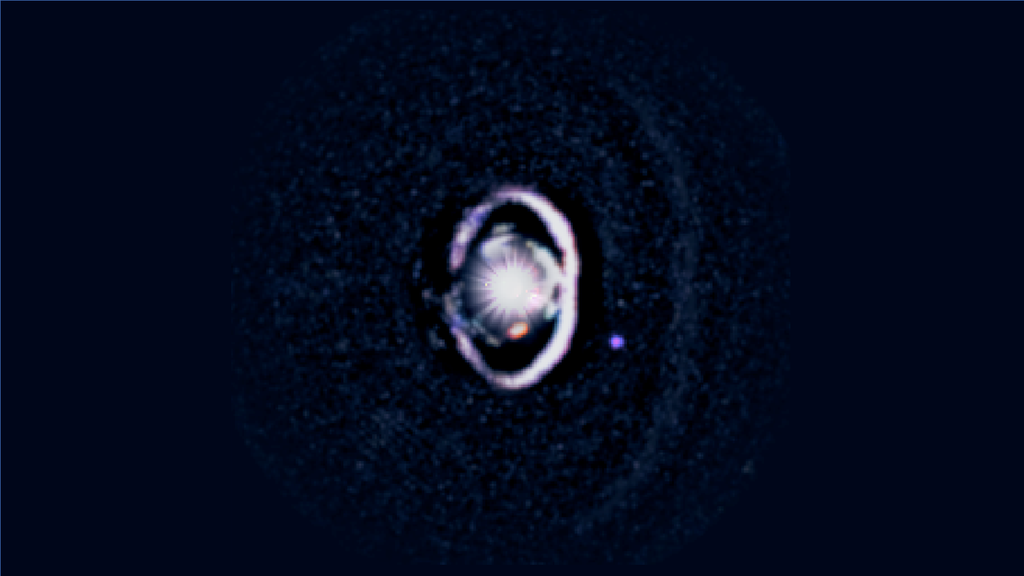
The Amazing WISPIT 2 Exoplanet Discovery - 8/7/26, 6:30pm, YouTube & Steward Observatory Rm N210


Part 1: The Amazing WISPIT 2 exoplanet discovery and images with UA's MagAO-X camera
Part 2: How to avoid Light pollution in Tucson
In a two-part presentation, Dr Laird Close will present results of a University of Arizona multi-year program to directly image young (~5 Myr old) accreting protoplanets in H-alpha. In the second part, he’ll introduce us to infrared imaging which few amateur astronomers consider doing but can be successfully done under light polluted skies such as in urban Tucson.
Dr Close is the Primary Investigator of the MaxProtoPlanetS survey, using the extreme AO system MagAO-X on the 6.5m Magellan Telescope at Las Campanas Observatory in the Atacama Desert of Chile. This survey has produced compelling, very high contrast images of protoplanets in the PDS 70, 2MJ1612, and WISPIT 2 systems. The WISPIT 2b and 2c images are some of the most popular and important images of young planets ever made.
In the second part of his presentation, Dr Close will discuss the increasing brightness of the night sky due to inexpensive LED lighting. He’ll compare increases in the visible spectrum (400-700nm) to changes in the near infrared spectrum (750-1000nm) and will discuss how amateur astronomers in Tucson can help further explore new ways of avoiding light pollution in Tucson.
Dr Laird Close received his Ph.D. in Astronomy from the University of Arizona. He is currently a Professor of Astronomy and an Astronomer at the University of Arizona. He is an expert in Adaptive Optics system design, having developed several adaptive optics systems and high-resolution infrared cameras, making it possible for ground-based telescopes to outperform space-based telescopes like HST.
Event Links
YouTube: https://go.evvnt.com/3752181-0
