




This Event has Passed
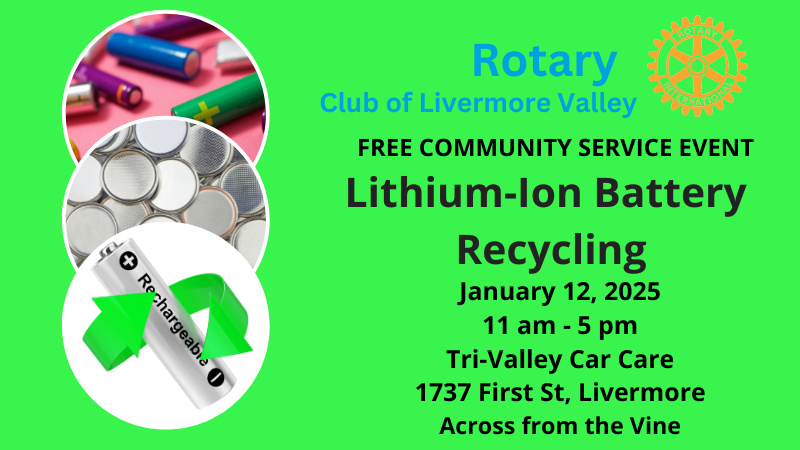
Lithium-Ion Battery Recycling by Rotary Club of Livermore Valley


What you can recycle:
bluetooth speakers
cell phones
cordless vacuums
electric shavers
electric toothbrushes
e-readers
hair clippers
hearing aids
laptops & Chromebooks
mixers/blenders
power tool batteries
robot vacuums
security cameras
smart watches
tablets
TV remote controllers
video game controllers
wireless headpones
wireless keyboards/mice
and more . . .
Please note: To recycle your device, the item must contain a lithium-ion battery. It must not require a plugged-in cord to operate. We only accept rechargeable items with lithium-ion batteries.
Why should you recycle lithium-ion batteries?
Keeps end-of-life lithium-ion batteries out of landfills
Helps increase the security of a domestic supply chain for raw battery materials
Supports domestic remanufacturing of lithium-ion batteries
Reduces the need to mine from the earth
Why it matters
As the world electrifies to combat climate change, lithium-ion battery demand is projected to increase by 500 percent in the coming years. These batteries will be needed for new electric vehicles and clean energy products but additionally, demand for rechargeable consumer devices is also increasing that source these same materials.
Batteries are in nearly every consumer device; from cell phones to laptops, e-bikes to scooters and electric toothbrushes to vacuum cleaners and power drills, consumer demand for rechargeable batteries is skyrocketing. And, as more electric vehicles hit our roads, we’ll need more and more batteries.
All lithium-ion batteries are made up of varying amounts of critical minerals like cobalt, copper, nickel, and lithium. Whether a laptop or an electric vehicle, lithium-ion batteries source the same elements on the periodic table. What’s perhaps even more incredible is that these metals can be recycled almost infinitely. Because metal atoms don’t degrade, recycled lithium or nickel units perform the same as newly mined material – in fact, sometimes even better! This creates a tremendous opportunity for recycling.
This program brings us one step closer to creating a domestic, circular supply chain for all end-of-life batteries and solving the environmental impacts of new products before they happen.
Event Links
Website: https://go.evvnt.com/2791997-0
