




This Event has Passed
Outside Voices at the ADK-GVC Chapter Meeting: Ice Climbing


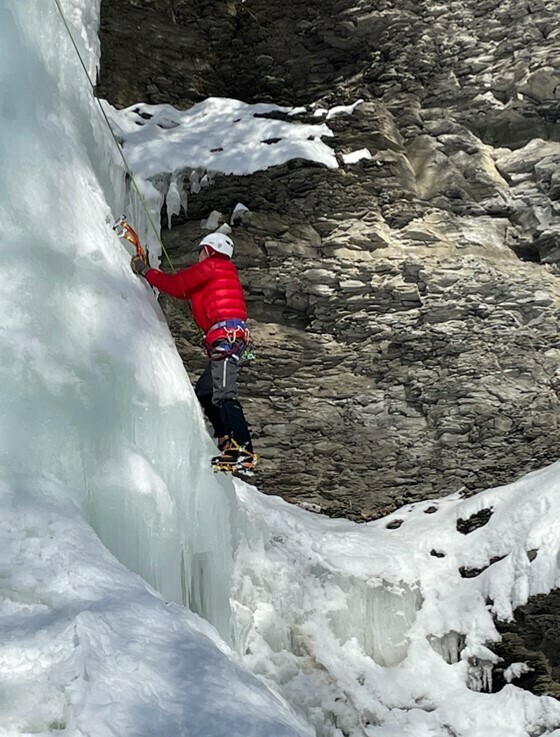
At this free and social meeting there will be a 6:30 workshop on telescopes by David Bishop, Program director of the Astronomy Section of the Rochester Academy of Science and at 7:30 the presentation is, Ice Climbing: Chandeliers, Cauliflower and Other Ice Ripples by Serge Lossa.
Serge Lossa has been mountaineering, skiing (including back country skiing), and rock climbing since he was a teenager living in his native country of France. He practiced glacier techniques in the Alps in his youth in the 1960s. Adepts of Alpine mountaineering had to deal with ice regardless of the season. Serge recently returned to ice climbing and will focus his presentation on the differences between rock and ice climbing, especially as it relates to equipment and technique.
Serge writes:
While rock climbing and ice climbing have similarities (fitness, muscle strength, balance, etc.) they are quite different. Smooth, flat, vertical faces are welcome in ice and impossible in rock! Ice is more difficult to “read”, ice changes with temperature from “soft ice-cream” at 32+ to window glass at -10!
Yvon Chouinard (Black Diamond, Patagonia) made quite an impression in 1969 when he climbed what became the “Chouinard Gully” in the Chapel Pond area in Keene Valley. For me, the real pleasure of ice climbing is to find the right path through the chandeliers, cauliflower and other ice ripples to conquer a face despite the challenges. Sometimes you get so exhausted, sometimes you get quite concerned or even scared, but what a pleasure it is when you rappel down.
Water is sometimes running behind the ice. My first lead climbing was on Roaring Brook (3 pitches), next to the trail going up to Giant in Keene Valley. It was early spring in a nice sunny afternoon. I could hear the water “roaring” behind the ice. I placed an ice screw and to my surprise I got a flow of water through the screw, as if I had just opened a garden hose, dripping on my jacket, pants, boots. I had to move out fast and put another screw to a safer place!
Another time, I was belaying a friend in the Beaver River gorge, not far from Pulaski. It was late in the season, and I could see these huge chandeliers hanging from the top of the cliff, not far from me. Suddenly, one of them gave with a roaring noise, and I could feel the earth shaking like an earthquake. Don’t go under the chandeliers or try climbing them!
Available technology and larger markets have made equipment more affordable and much better to tackle icefalls. Ice climbing equipment includes:
• Ice axes
• Climbing crampons (not hiking crampons)
• Shoes (very rigid, similar to ski boots)
• Ice screws
• Dry (water repellant) ropes
• Rock or ice climbing equipment: harness, quickdraws, slings, ATC or Gri-gri, etc.
Clothing is also specific. Keep in mind that if there is an icefall, there is water going down…
• Jacket (you get warm at climbing, you get cold at belaying)
• Ski pants
• Gloves (several pairs as they may get wet)
• Gaiters (a must as they keep your pants tight when hitting ice with the crampons)
• Helmet (indispensable, ice pebbles are flying all around)
• Warmers are recommended
As for hiking, when Serge turned 65, he decided to climb the 46 High Peaks in wintertime, which took him three winters. Then when he turned 70, he did it again in one season!
Event Links
Website: https://go.evvnt.com/1567243-0
