




This Event has Passed


A modular bookcase is more than a practical place to display books. With the right arrangement, it can become a personalized focal point, a compact work zone, or an efficient way to divide an open room. Unlike fixed furniture, modular designs allow shelves and compartments to be arranged according to changing needs. That flexibility makes them especially useful in home offices, apartments, bedrooms, living rooms, and multifunctional spaces.
The best part is that customization does not always require complicated tools or expensive renovations. A thoughtful combination of shelves, storage boxes, decorative objects, lighting, and office accessories can completely change the appearance and usefulness of the same unit. Here are creative ways to make a modular shelving system work harder while reflecting your personal style.
Start with a Flexible Bookshelf Layout
The first step is to decide what role the furniture should play. Before arranging anything, measure the wall and consider how much floor space you want to preserve. A symmetrical configuration can create a polished appearance, while an offset arrangement gives the room a more relaxed and contemporary character.
Think about the objects you need to store rather than simply filling every available compartment. Leave some sections open so the arrangement can breathe. Books can occupy one area, decorative items another, while baskets or containers conceal smaller belongings. This approach prevents the unit from looking crowded and makes future rearrangement much easier.
Use a Tall Bookcase to Think Vertically
When floor space is limited, vertical organization can make a dramatic difference. A tall configuration uses unused wall height instead of spreading furniture across the room. This is particularly useful in compact apartments, narrow offices, and bedrooms where every square foot matters.
Place frequently used items between eye and waist level, then reserve higher shelves for seasonal belongings or decorative pieces. A sturdy step stool can provide occasional access without forcing everyday items into inconvenient positions. Keeping the lower section visually lighter can also make a small room feel less enclosed.
Build Smarter Office Storage into the Design
A modular system can easily become part of a productive workspace. Instead of treating office supplies as separate clutter, incorporate them into the shelving plan. Containers can hold notebooks, cables, stationery, and accessories, while labeled boxes make less frequently used materials easier to locate.
For a more professional appearance, group similar items together. Keep documents in one section, technology accessories in another, and personal objects in a separate area. Matching containers can create visual consistency even when the contents vary.
Another useful technique is to designate one shelf as a daily-access zone. Everything needed during a typical workday can stay there, reducing the time spent opening drawers or searching through boxes.
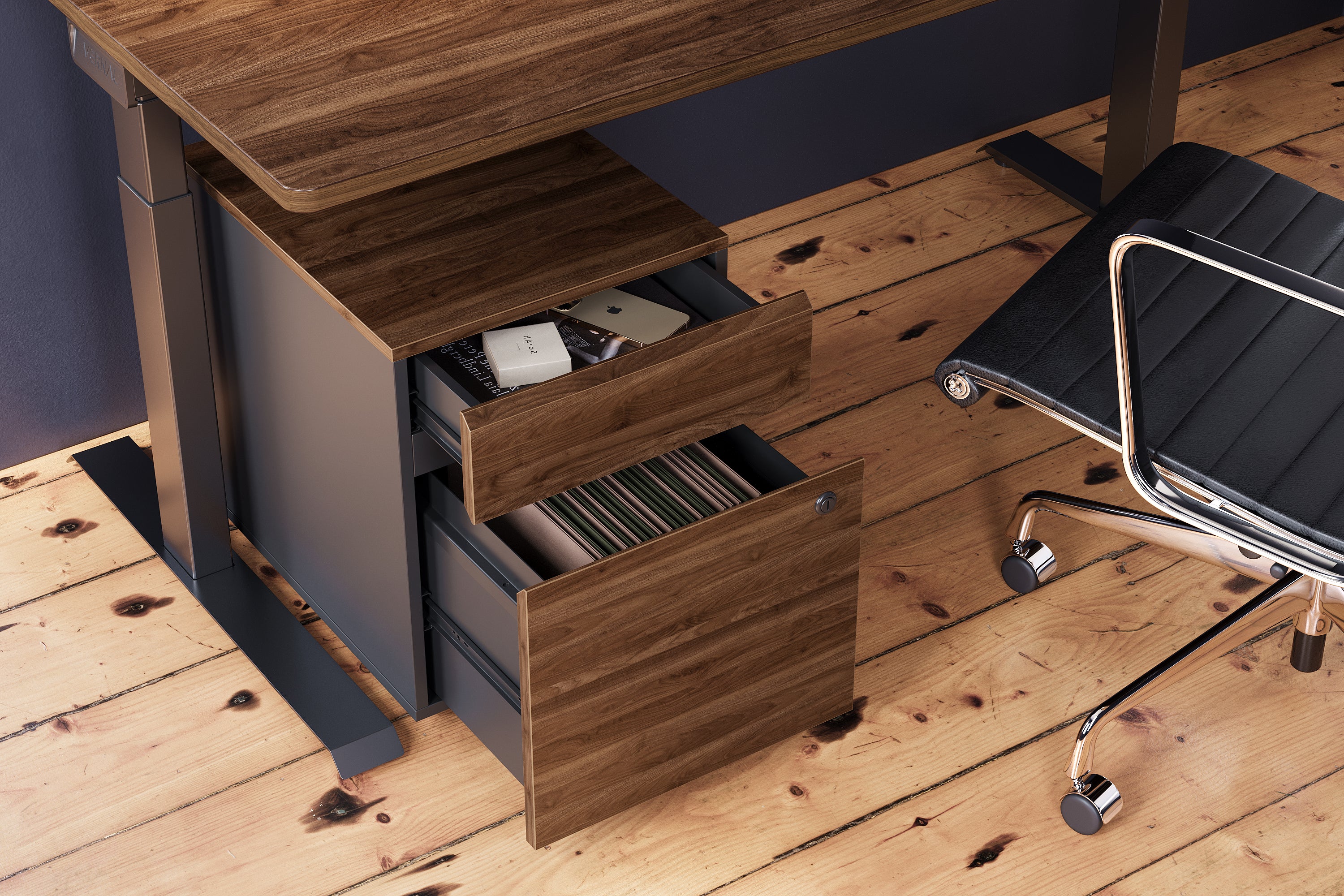
Add a 2 Drawer File Cabinet for Hidden Organization
Open shelves are excellent for items you want to see, but not everything deserves to remain on display. A compact two-drawer filing unit can provide a convenient transition between open shelving and concealed organization.
Use one drawer for active documents and another for reference materials, household paperwork, or archived files. The important principle is to establish a clear filing system before placing papers inside. Labels such as “Bills,” “Home,” “Work,” and “Important Records” can make retrieval much faster.
Keep the most frequently accessed documents within easy reach and avoid allowing the drawers to become miscellaneous storage. A simple filing routine is more effective than repeatedly reorganizing an overloaded cabinet.
Create a Compact Desk Pedestal Zone
If the modular unit is being used near a desk, consider creating a compact support station. A pedestal-style storage element can keep everyday office essentials close without occupying another large area of the room.
This arrangement works particularly well for small home offices. Instead of adding multiple independent pieces of furniture, combine the shelving system with a nearby desk and compact storage. Keep printers, notebooks, chargers, and frequently used supplies in designated compartments so the desktop remains clear.
Combine an Office Storage Cabinet with Open Shelves
One of the most effective customization techniques is mixing concealed and visible storage. Open shelves are ideal for books, artwork, plants, and attractive containers, while closed compartments are better for paperwork, electronics, cleaning supplies, and objects that create visual clutter.
This combination also creates balance. If every compartment is open, a room can quickly look busy. If everything is concealed, the furniture may feel heavy. Mixing the two gives you both accessibility and a cleaner appearance.
Use a Small Storage Cabinet for Awkward Spaces
Small gaps are often wasted areas in a room. A compact cabinet can turn an unused corner, narrow wall section, or space beside a desk into useful organization. Choose dimensions carefully so doors and drawers can open without interfering with nearby furniture.
These smaller compartments are especially helpful for items that are difficult to categorize. Craft materials, charging accessories, household tools, and personal belongings can each have a dedicated location. When every category has a home, maintaining organization becomes much easier.
Personalize with Modular Shelving Units
The defining advantage of modular furniture is its ability to evolve. As your lifestyle changes, the configuration can change with it. A setup that begins as a simple reading area could later become a home office, display wall, or family organization center.
Experiment with alternating shelf heights, staggered compartments, and different combinations of open and enclosed sections. You can also introduce baskets, fabric bins, framed artwork, plants, and small lighting elements to add personality.
For a more cohesive look, choose a limited palette of materials and decorative colors. Repeating two or three visual elements throughout the arrangement creates unity without making every shelf identical.
Finish with Lighting and Everyday Habits
Lighting can transform the atmosphere of a customized shelving arrangement. Positioning a lamp near display areas can highlight books and decorative objects while improving visibility. If the furniture is used as a workspace, task lighting should be positioned to minimize glare on screens and paperwork.
Finally, remember that good organization depends on habits as much as furniture. Return items to their designated locations, review unused belongings periodically, and leave a little spare capacity for future needs. Avoid filling every compartment simply because space is available.
A thoughtfully customized modular bookcase can therefore serve far beyond its original purpose. By combining vertical design, concealed compartments, practical accessories, and personal touches, you can create an organization system that fits your space today and adapts to tomorrow. The result is a room that feels more orderly, functional, and distinctly your own.
