




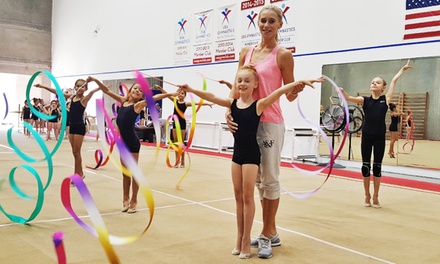
Enrollment and One Month of Rhythmic Gymnastics for Multiple Age Groups at Burlo Gymnastics (Up to 59% Off)


Registration required. Limit 1 per person, may buy 3 additional as gift(s). May be repurchased every 60 days. Valid only for option purchased. Not valid for clients active within the past 3 month(s).
Rhythmic gymnastics instruction in a 9,000 square-foot studio in Chatsworth, CA provides an outlet for creative expression through movement
Choose from Five Options
- $40.80 for ages 2.5 to 4: enrollment and one month of rhythmic gymnastics, one class per week ($100 value)
- $72.40 for ages 2.5 to 4: enrollment and one month of rhythmic gymnastics, two classes per week ($160 value)
- $82.40 for age 5: enrollment and one month of rhythmic gymnastics, two classes per week ($200 value)
- $153 for ages 6 to 8: enrollment and one month of rhythmic gymnastics, three classes per week ($325 value)
- $202 for ages 9 to 10: enrollment and one month of rhythmic gymnastics, three classes per week ($450 value)
Trampolining: Fitness Amid the Fun
Trampolines are not only fun—they also make for an effective workout. Read on to learn more about this cardio-burning contraption.
There’s nothing quite like the rush of your first time on a trampoline, propelling your body impossibly high for a rush of weightlessness even a bird would envy. But trampolines can be used for much more than recreation. NASA, for example, uses them to prepare astronauts to handle the in-air flips and turns of the Martians’ cruel human circus. Jumping on a trampoline also has a marked effect on health, serving as a vigorous cardiovascular workout with minimal impact on joints. The low impact also puts a light amount of positive stress on the bones, which helps them build up mineral deposits. Physicians even recommend trampolining as a way to enhance the performance of the heart and lungs among patients with cystic fibrosis.
Acrobats Collide
The modern trampoline owes its existence to a classic odd-couple encounter. In the 1930s, Larry Griswold, a charismatic acrobat known for his outlandish tricks, was working as an assistant gymnastics coach at the University of Iowa when he met another young gymnast with a curious mind. Since the age of 16, George Nissen had been tinkering in his parents’ garage on a project he called a “bouncing rig.” Together, the two developed Nissen’s idea into a more effective prototype, christening the new contraption the . . . bouncing rig. The name “trampoline” didn’t come to Nissen until 1937, when he and a group of fellow acrobats known as the Three Leonardos took their act to Mexico, where Nissen heard the Spanish word for “diving board”—trampolin.
Bonus Points
- A fitness discipline known as rebounding uses a smaller version of the trampoline to aid with a variety of aerobic workouts.
- Trampoline made its official Olympic debut at the 2000 games in Sydney; similar to gymnastics, each routine consists of 10 recognized skills.
- In 1960, Nissen rented a kangaroo named Victoria and bounced with her on a trampoline in Central Park.
