




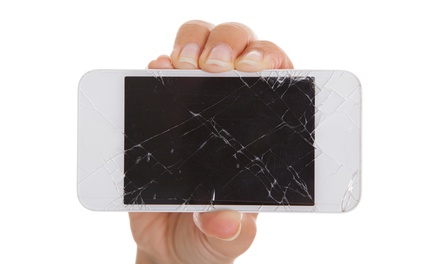
Smartphone and iPad Screen Repair from B&B Computers and Cell Phone (Up to 61% Off). Three Options Available.


May be repurchased every 90 days. Limit 3 per person, may buy 3 additional as gifts. Valid only for option purchased. Additional required repairs may result in additional fees. Must use promotional value in 1 visit.
Technicians speedily replace broken screens on phones, including the iPhone 4 and 4s, Galaxy III, and iPhone 5, and on iPads
Choose From Three Options
- $20 for back glass repair for iPhone 4 or 4S (a $45 value)
- $69 for front screen repair for iPhone 5 or Galaxy S3 (a $179 value)
- $89 for screen repair for iPad 2, 3, or 4 (a $199 value)
Gorilla Glass: A Screen’s Shining Armor
The glass on a smartphone is engineered to withstand the stresses of your day-to-day life. Read on to learn about the particular brand behind many products—Corning’s Gorilla Glass.
In order for the glass in your smartphone, tablet, or computer to incorporate a touchscreen, it has to be extremely thin. But thin glass doesn’t hold up against the wear and tear of daily use, so manufacturers of these mobile devices started using glass that’s been chemically treated to be both thin and strong. This is the basic concept behind Corning Inc.’s ultra-resilient Gorilla Glass, named after a gorilla’s inherent toughness and beauty.
As with any glass, the process of making Gorilla Glass begins by melting down a mixture of sand and other chemicals in a furnace. After that, however, automated robotic arms form the molten mixture into 0.5-mm-thick sheets, called aluminosilicate because they contain aluminum, silicon, oxygen, and sodium ions. These ultra-thin sheets can’t resist damage quite yet; to become Gorilla Glass, they have to undergo a chemical process called an ion exchange. Each sheet is dipped into a 752-degree Fahrenheit electrolyte solution, which breaks the bonds of all sodium ions and replaces them with larger potassium ions. The larger ions cause the glass to compress, packing larger atoms into the same space to give a boost of strength akin to Popeye’s biceps after a few cans of spinach.
Gorilla Glass is a relatively new product—it’s only been used in mobile devices since 2009—but Corning has been developing the concept for years. The company began experimenting with chemically strengthened glass way back in 1960. Nowadays, Corning is on its third iteration of the product, Gorilla Glass 3, which is said to be up to three times more damage resistant than Gorilla Glass 2. Gorilla Glass in all its iterations can be found in hundreds of devices, including those made by Apple, Dell, and Motorola.
Get this Deal