




×
Your location has been changed to Albuquerque area.
This Event has Passed
WIldlife Wednesday: USFWS Biologist Talk on Sandhill Cranes


New Mexico provides important winter habitat for the greater sandhill crane, with most wintering along the Rio Grande from Albuquerque to the Bosque del Apache, south of Socorro.
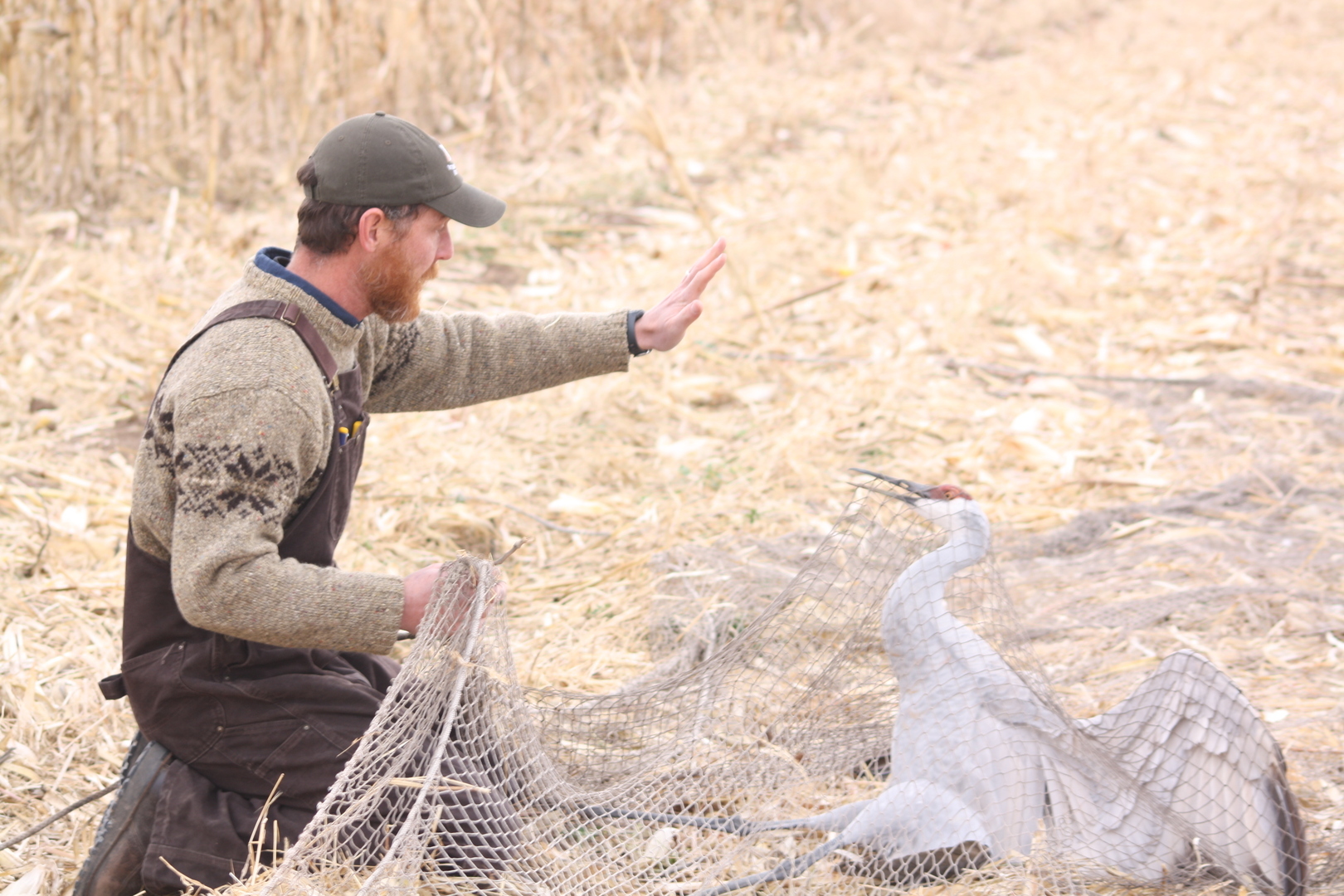
Dan Collins, migratory game bird biologist with the U.S. Fish and WIldlife Service in Albuquerque, tracks sandhill cranes and other migratory birds in the state.
Collins will be the featured speaker at the New Mexico Wildlife Federation’s January 2024 Wildlife Wednesday event. His free presentation will start at 5:30 p.m., Jan. 10,, at Marble Brewery’s Northeast Heights Taproom, at 9904 Montgomery Blvd., NE, Albuquerque. The event is free.
Sandhill cranes are among the world’s oldest bird species, with fossil records showing they’ve been largely unchanged for millions of years.
“I call them modern-day pterodactyls, because they have been on this planet for a very, very long time,” Collins said. “And the fact that they’ve been able to adapt to a multitude of changes over miillions of years is extraordinary.”
The survival of the sandhill crane for so long is all the more remarkable given that they are slow to reach reproductive age and don’t produce a lot of young, The birds often don’t breed until their five years old. Nesting females typically produce two eggs, but commonly only one chick will survive.
The anatomy of the sandhill crane’s bronchial tube helps them make their distinct noise, which can be heard for miles under certain conditions.
“Anatomically, the bronchial tube comes out of where the lungs sit into sort of the chest cavity,” Collins said. “So that bronchial tube helps them make that gurgling sound. It’s just set up differently, and allows them to make those noises, and allows that sound to carry a lot further than say, a duck or a goose.”
The sandhill cranes in New Mexico come from two different populations, Collins said. “Primarily the cranes that are on the east side of the state are going to be from the Mid-continent population,” he said. “And the birds that overwinter here in the Middle Rio Grande and southwest portion of the state are going to be from the Rocky Mountain population.”
There’s some overlap of the different populations, but Middle Rio Grande valley is considered the most important over-wintering area for the Rocky Mountain population, Collins said.
The Mid-continent population, made up primarily of lesser sandhill cranes, is well over 1 million birds, Collins said. He said the Rocky Mountain population is only about 27,000 birds, of which about 80 percent overwinters in the Middle Rio Grande Valley.
The sandhill crane population along the Middle Rio Grande is stable to slightly increasing, Collins said. The population objective is between 17,000 to 21,000 birds and the current three-year running average is about 23,000.
Event Links
Website: https://go.evvnt.com/2153134-0
